The Organist
Episode 73: What We Talk about When We Talk about Two Bears High-Fiving
Hermann Rorschach’s inkblot test has become ubiquitous in pop-culture as shorthand for both psychiatry and the subconscious. The first biography of Rorschach explores how our popular idea of the test gets it wrong.
 By Andrew Leland • • 27m Listen
In 1921, the Swiss psychiatrist Hermann Rorschach, after years of experimenting with different ways to use his artistic interests to expand the potential of psychoanalysis, created a series of inkblot drawings that reveal the unconscious mechanisms of a patient’s brain. Six months later, he died, just before the inkblot test became an international phenomenon. Since then, Rorschach’s inkblot test has become pop-cultural shorthand for both Freudian psychology and the depths of the human mind. It has become an inescapable reference in art, film and journalism. Damion Searls, author of the first-ever biography of Rorschach, explains how our application and understanding of the test diverge from Rorschach’s intentions.
In this episode, you’ll also find Organist fan fiction from author Elizabeth McKenzie, a “verbal selfie” from Casey Jane Ellison, and the winner of the Sarah Awards’ Very Very Short Short Audio Fiction contest.
Hermann holding daughter Lisa, 1918.
Hermann in his office in the Herisau apartment, cigarette in hand, 1920.
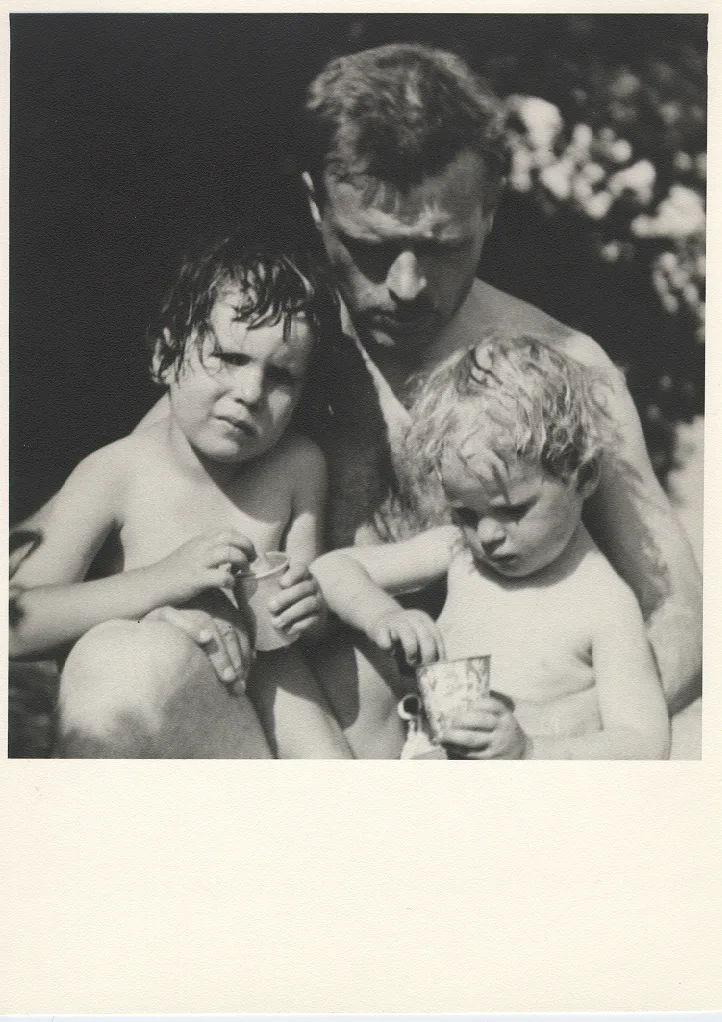
Hermann, Lisa, Wadim, summer 1921.
Rorschach age 6, in Swiss folk costume, 1819.
Rorschach early inkblot.
Rorschach notes on printers proof.
Rorschach on a hiking trip in the Santis, September 1918.
Rorschach rowing on Lake Constance, CA. 1920.
Roschach dressed in wizard costume.
Soldiers looking at inkblot.
Wedding Photo, May 1, 1910.
Pictures credit: Archiv und Sammlung Hermann Rorschach, University Library of Bern.
